A grant is the cheapest money a small business can get: it does not have to be repaid, and it does not cost you a share of the company. That is also why grants attract so much bad advice. Most of the lists circulating online mix real programmes with dead ones, and most owners waste their time applying for money they were never eligible for.
The honest picture in 2026 is narrower than the headlines suggest, but it is not empty. Real grants exist — for research, for rural businesses, for exporters, and for a handful of private competitions. The trick is knowing which pot you fit, and doing the paperwork in the right order.
The first fact to accept: the SBA does not fund your startup
This is where most searches go wrong. The US Small Business Administration states plainly on its own grants page that it does not provide grants for starting and expanding a business. Its grants go to nonprofits, resource partners and educational organisations that support entrepreneurs through counselling and training — not to an ordinary shop, café or consultancy looking for operating cash.
That does not mean the federal government has nothing for you. It means the money is tied to a public purpose: research, farming, rural development, exporting, or training workers. If your project matches one of those purposes, there is real funding. If it does not, no amount of clever application writing will change the answer.
Federal grants worth knowing about
SBIR and STTR — America’s Seed Fund. The largest direct federal pool for small firms is the Small Business Innovation Research programme, run with the Small Business Technology Transfer programme across eleven federal agencies. These fund research and development with a federal need behind it: technology, science, health, defence and engineering. Phase I awards are typically in the low six figures, for proving a concept; Phase II awards can run into seven figures. Current opportunities are listed on SBIR.gov. This is the one federal route where a small, technical company can win serious money — and also the one with the heaviest paperwork.
USDA rural programmes. If your business is agricultural or based in a rural area, the US Department of Agriculture runs several grant programmes, including Value-Added Producer Grants, which can fund up to $50,000 for planning and $200,000 for working capital. The amounts are smaller than SBIR awards, but the competition is narrower, because only rural and agricultural businesses can apply.
STEP grants for exporters. The SBA’s State Trade Expansion Program gives money to state governments, which then help small businesses with the costs of exporting: trade missions, trade show stands, translation, and marketing material for overseas customers. You do not apply to the SBA directly — you contact your state’s STEP contact. If you already sell abroad, or have a realistic plan to start, this is one of the most practical federal programmes.
Grants.gov — the front door. Almost every federal grant is listed on Grants.gov, the government’s own portal. Use it to search, but read the eligibility section of each listing before you get excited: most opportunities there are aimed at organisations rather than individuals, and the ones for small businesses go to companies meeting the SBA’s size standards for their industry.
Register early, or don’t bother
For any federal grant, two registrations come first, and both take time. You need a Unique Entity ID from SAM.gov, the federal registration system, and an account on Grants.gov. SAM.gov registration is free, but it can take up to ten business days to activate. Do this before you find the perfect grant — a deadline will not wait while your registration clears.
State and local money
State and local programmes are smaller, but often a better bet than federal ones, because fewer businesses compete for them. States run their own schemes for hiring, training, and setting up in particular areas, and many cities have small funds for high-street businesses. Your local Small Business Development Center tracks what is open in your area this quarter — a phone call there is worth more than an evening of web searches.
Private and corporate grants
Private grants are the easiest to apply for and the hardest to win, because anyone can enter. A few are worth your time. Verizon Small Business Digital Ready awards ten small businesses $10,000 each month, in partnership with the nonprofit LISC, with applications reviewed on a rolling basis through December 2026. Shophand’s Small Business Boost Grant awards $5,000 twice a year — $2,500 in cash and $2,500 in support and tools — to US businesses with fewer than 50 employees and under $5 million in annual revenue. The Amber Grant runs monthly, with applications closing on the last day of each month, and Secretsos awards one $2,500 grant per quarter.
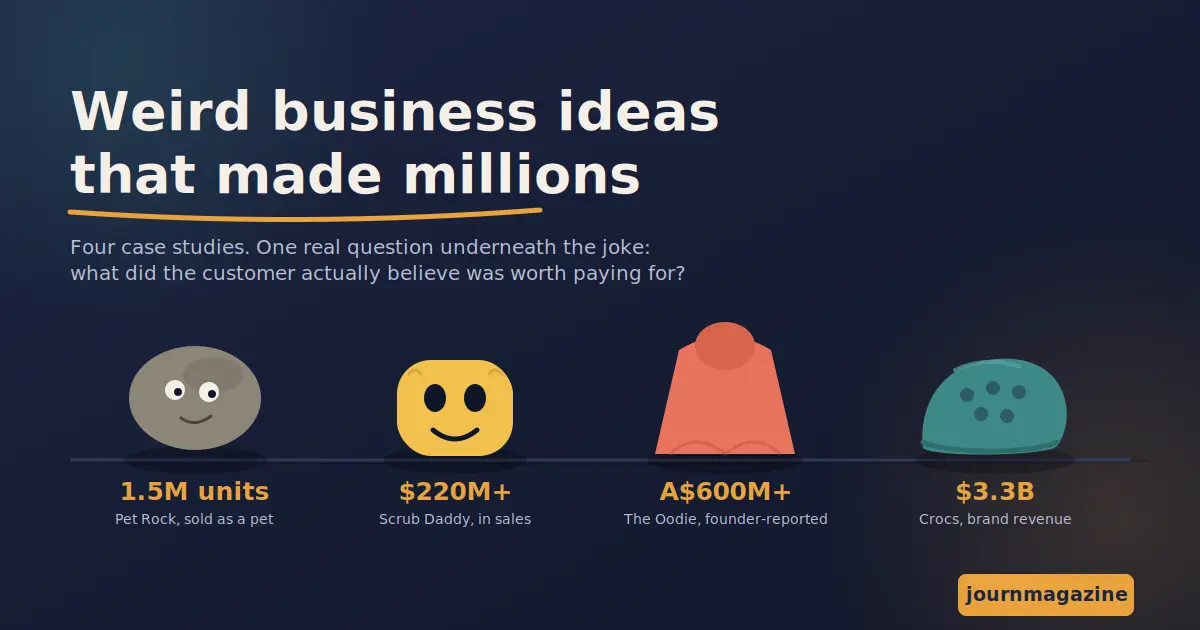
Private competitions tend to favour businesses with a clear story. A distinctive product, a local impact, or an unusual path into business all help an application stand out. If you want a reminder of how far an unusual idea can go, our roundup of weird business ideas that made millions shows what happens when a strange idea solves a real problem.
How to apply without wasting months
Match first, write second. Before writing a word, check four things: your stage, your industry, your location, and what the grant actually funds. If any one of them does not fit, move on. Applying to ten wrong grants is worse than applying to two right ones.
Write to the funder’s mission, not yours. A grant is not a prize for having a good business. It is money for a specific public goal, and the winning applications show how their project serves that goal. Read the funding announcement in full, then answer exactly what it asks.
Keep the paperwork ready. EIN, business registration, tax records, a short business plan, team bios, and support letters. Having these ready turns a 30-day deadline from a panic into a normal week of work.
Use AI to draft, never to submit. A chatbot can turn your notes into a structured first draft and catch clumsy phrasing, which saves real time on a long application. But the facts, the numbers and the claims must be yours, checked by you — a funder that spots invented detail will not give you a second chance. If you want a sense of where AI genuinely helps a small business day to day, our guide to how small businesses are actually using AI in 2026 covers the practical uses and the limits.
Expect a long wait. Federal review cycles commonly run three to nine months. A grant is not a rescue for a cash problem next month — if you need money sooner, a loan or a paying customer is the honest answer.
Budget the hours. A serious federal application can take days of work, and the time comes out of running your business. Anything that frees up the owner’s time — including letting an AI receptionist handle routine calls while you write — makes a long application far more manageable.
Watch out for grant scams
The government never calls, texts or emails to offer you a grant. That is a scam, every time. The SBA only communicates from email addresses ending in @sba.gov. Real grants are free to apply for, and nobody legitimate will ask you to pay a fee to release grant money.
Frequently asked questions
Does the SBA give grants to start a business?
No. The SBA states that it does not provide grants for starting and expanding a business. Its grants go to nonprofits, resource partners and educational organisations. Federal grants for a for-profit business are mainly for research, farming, rural development and exporting.
Where do I actually apply for a federal grant?
Start on Grants.gov, which lists federal opportunities, and register on SAM.gov first for a Unique Entity ID. For research funding, go straight to SBIR.gov. For export help, contact your state’s STEP representative.
How long does a grant application take?
Registration on SAM.gov can take up to ten business days. Writing a federal application takes days of work, and review cycles commonly run three to nine months.
Are small business grants really free money?
They do not have to be repaid, and they do not cost equity — but they are not free. You pay in time, paperwork, and reporting, and they are tied to a specific purpose, so you cannot spend the money however you like.
What is the best grant for a brand-new business?
It depends on what the business does. A technical startup should look at SBIR, a rural or farm business at USDA programmes. Most other new businesses will find private competitions, state programmes, or a loan more realistic than a federal grant.
The bottom line
Small business grants in 2026 are real, but they are specific. The federal money goes to research, rural businesses and exporters; the SBA itself does not fund startups directly; and the private competitions are small, popular and fiercely contested. The owners who win are the ones who match themselves to the right programme before they write a word, register early, and treat the application as a serious piece of work rather than a lottery ticket.